Russia's fuel crisis: Ukraine says 51% of refining is down. What the independent data shows
Ukraine says its strikes have disabled 51% of Russia's oil refining capacity, while Putin says they cost Russia about 1% of its GDP. Independent figures from the International Energy Agency confirm a very large drop in refining, but not Ukraine's highest numbers.

 Illustration
Key points
- The IEA says Russian refineries processed 3.8 million barrels a day in June, the lowest level in more than 20 years.
- By late August, 27 of Russia's 32 major refineries had been hit at least once, by our reading of IEA figures. Hit does not mean disabled.
- Ukraine's figure of 51% of refining capacity disabled has no published method. CLAIMED – Claimed: stated by a government, army or official, but not independently verified.
- Petrol queues, rationing and the first-ever export bans on jet fuel and diesel show the effect at the pump.
- Russia is adapting with imports and relaxed fuel standards, and the campaign carries diplomatic costs.
Watch the video
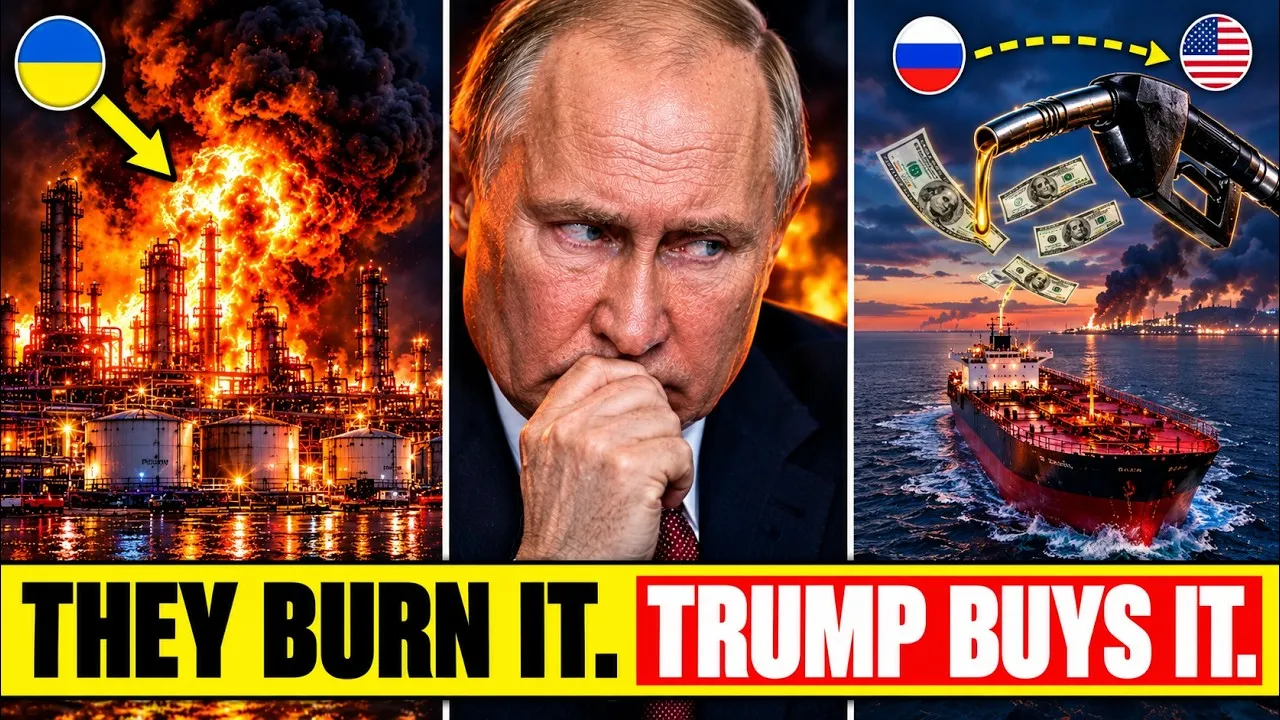
On 4 October, Ukraine’s Defence Ministry announced that its strikes had disabled 51% of Russia’s oil refining capacity. Source [2] CLAIMED – Claimed: stated by a government, army or official, but not independently verified. Three days earlier, on 1 October, Vladimir Putin said the same strikes had cost Russia roughly 1% of its GDP, and had only partly achieved Ukraine’s aim of damaging the Russian economy. Source [9] CLAIMED – Claimed: stated by a government, army or official, but not independently verified.
One number comes from the side doing the striking, the other from the side being struck. Neither can be independently verified. And yet, inside Russia, there are petrol queues, rationing by number plate, and export bans on petrol, jet fuel and diesel – the first ever on jet fuel and diesel.
This article sets out what Ukraine claims, what Russia admits and what independent bodies such as the International Energy Agency can actually measure. Unlike Putin’s territorial claims, where independent data cut the Kremlin’s number down to size, the picture here is more complicated: the independent data supports a large part of Ukraine’s story, but not every number Ukraine gives.
Why refineries?
A refinery turns crude oil into the fuel that moves a country: petrol, diesel and jet fuel. At the heart of most refineries is a crude distillation unit, the first step in the process. If that unit is knocked out, much of the plant stops.
Ukraine’s General Staff names these units in its strike reports. It said, for example, that the strike on the Syzran refinery on 15 September hit the crude distillation unit and a tank farm. Source [3] These are large, complex pieces of equipment, and they are not quick to replace.
Ukraine describes the campaign as self-defence under Article 51 of the UN Charter, aimed at reducing Russia’s military and economic potential. That is Ukraine’s framing, and we report it as such.
What is confirmed
The International Energy Agency published a commentary on 17 September. Source [1] It counts 32 major Russian refineries with a combined installed capacity of roughly 6.5 million barrels a day. In June, it says, they processed 3.8 million barrels a day – the lowest level in more than 20 years and about 30% below a year earlier. CONFIRMED – Confirmed: backed by at least two independent, reliable sources or by direct evidence.
The IEA also says petrol output is down about 20% compared with 2025, and diesel output nearly 30%. It expects refinery throughput to average about 4 million barrels a day for the rest of 2026 and through 2027. Source [1]
On the pace of the campaign, the IEA says that in the first eight months of 2026, a Russian refinery was hit on average once every three days. As of late August, only five of the 32 major refineries had not been hit at all, all of them in eastern Siberia or the Far East. By our arithmetic, that means 27 of 32 have been struck at least once. Source [1]
That number needs care. Hit does not mean disabled: a refinery can be struck, repaired and running again within weeks. Counts of what is a “major” refinery also differ between sources. We use the IEA’s count of 32 because it is the one we can trace.
Other reports point the same way. A calculation reported by the Ukrainian outlet NV from Bloomberg says Ukraine hit Russian refineries at least 21 times in August, the highest monthly count of the full-scale war. Source [5] RFE/RL reported in June that more than two dozen strikes since March had hit eight of Russia’s ten largest refineries. Source [6]
So the first confirmed point is this: the campaign is intense and sustained, and it has measurably cut Russian refining.
What is only claimed
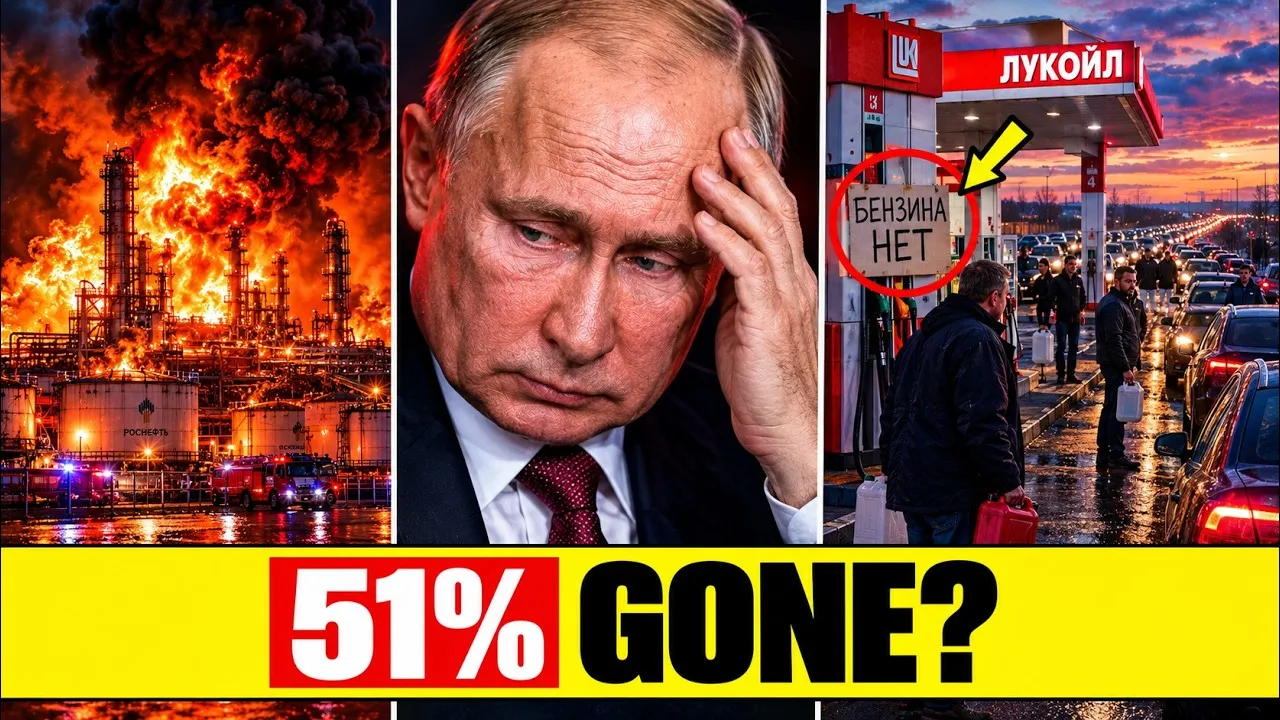
Ukraine’s General Staff has published a running figure for how much Russian refining capacity is disabled. In mid-July, as reported by the Financial Times, it said 42.74%. On 21 September it said more than 45% of what it calls “design” refining capacity. Source [3] On 4 October the Defence Ministry said 51%, adding that analysts from Ukraine’s intelligence services, the General Staff and the Defence Ministry had assessed the strikes’ effects. Source [2]
The Associated Press reported that the claim could not be independently verified, and that Russian officials have not released figures on damage to oil infrastructure. Source [4] So it is claimed, not confirmed. CLAIMED – Claimed: stated by a government, army or official, but not independently verified.
Compare it with the independent number. In mid-July, when Ukraine said almost 43%, the IEA said more than 20%. Source [1]
Why the numbers differ
There are at least four reasons, and we cannot tell you how much each one matters.
- Definitions. Ukraine’s figure refers to design capacity – what the plants were built to process. The IEA measures throughput – what actually went through them.
- Damage is not shutdown. A refinery with one damaged unit may still run at part load. Ukraine’s figure may count capacity as disabled at the moment of a strike, even if some of it returns later.
- Method. Ukraine has not published how it calculates the figure: no baseline, no list of total capacity, no breakdown by plant.
- Timing. The numbers were measured in different weeks, and the situation changes after each strike.
Here is a calculation of our own, labelled as ours. The IEA’s June throughput of 3.8 million barrels a day, set against 6.5 million barrels of installed capacity, is about 42% below capacity – close to Ukraine’s figure of around 43% at that time. We do not treat that as proof that Ukraine is right. Throughput can be lower than capacity for many reasons, not only damage. It is a coincidence worth noting, not a confirmation.
Independent analysts also disagree with each other. NV lists three estimates: Sergey Vakulenko of the Carnegie Russia Eurasia Center puts petrol capacity losses at 13 to 17%; independent analyst Vyacheslav Shiryayev says 30 to 35% of petrol capacity remains; and an analyst quoted by The Insider expects about a quarter of capacity to be shut for six to twelve months. Source [5] Rystad Energy forecasts average refining of about 4 million barrels a day by the end of the year, roughly 30% below the seasonal norm.
Where we land: the independent evidence supports a very large reduction in refining. The exact percentage is uncertain, and the highest figures are Ukraine’s own claims.
At the petrol station
Reuters, as reported by NV, said that by late August Russian petrol output was about 90,000 tonnes a day against roughly 115,000 tonnes of summer demand – by our arithmetic, a shortfall of more than a fifth. Source [5]
Meduza analysed reports from a fuel-tracking service and found that the share of sampled stations with petrol and no queue fell from 46% in late July to 32% in mid-August. Source [8] RFE/RL counted on 24 June that at least 55 of Russia’s 83 federal regions had government-ordered or company-imposed fuel restrictions – before the second wave of shortages. Source [6]
The Moscow Times described the situation region by region on 23 September. Source [7]
- Kaluga: the governor announced odd-even rationing by number plate and a ban on sales into canisters. “The lines are back,” he said.
- Zabaykalsky region: a 15-litre cap per vehicle at 48 stations.
- Leningrad region: a 30-litre cap, and nearly one in five independent and small stations had suspended work.
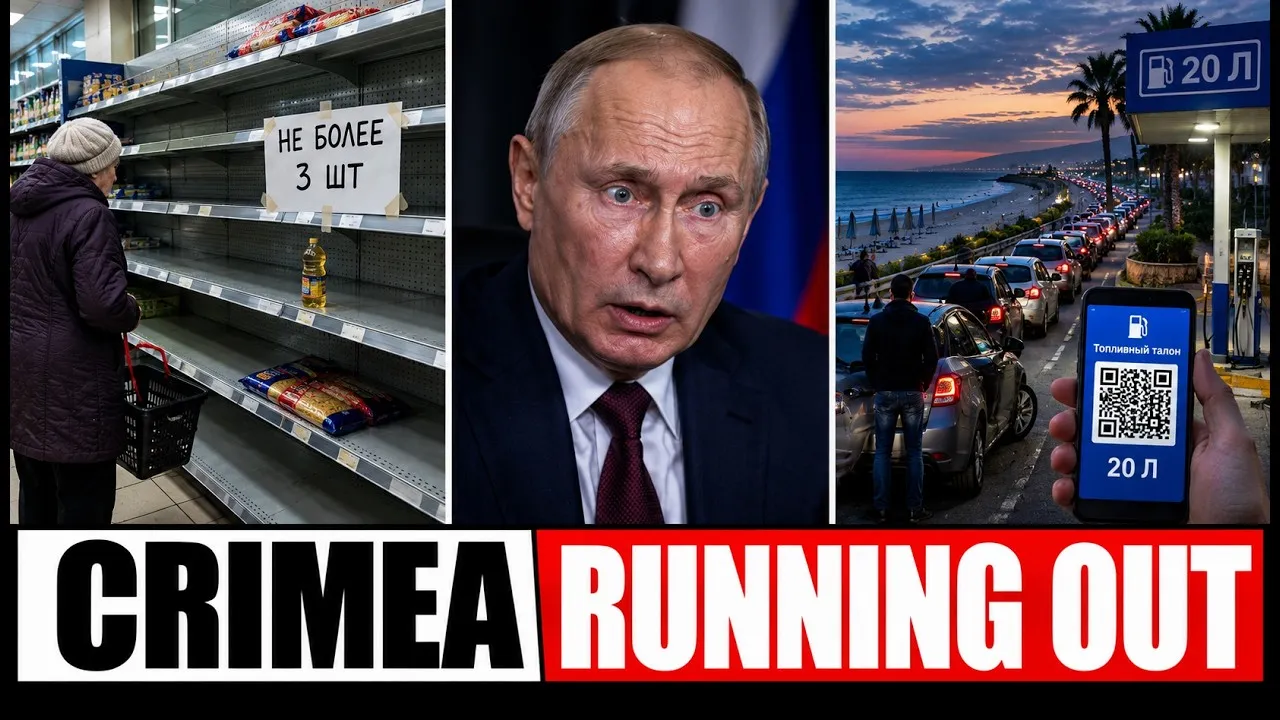
- Crimea: the Russian-installed governor announced a total halt to petrol sales in June after weeks of drone strikes on supply routes, RFE/RL reported. Source [6]
According to the IEA, as relayed by the Associated Press, some drivers have waited up to 40 hours to fill up. Source [4]
Prices tell the same story. The Moscow Times reports that the national average petrol price had risen 21% since the start of 2026, to 78.51 roubles a litre by 14 September. Source [7] The IEA, citing Rosstat, put the rise at over 19% for petrol and about 18% for diesel by 26 August. Source [1] Wholesale petrol hit a record 82,380 roubles a tonne, according to NV. Source [5]
How Moscow has responded
- Export bans. Petrol exports were banned in April, jet fuel for the first time in mid-June and diesel for the first time on 8 July. The petrol ban now runs to 31 January 2027; the diesel ban runs to the end of October, and the IEA said it may be extended. Source [1]
- Lower fuel standards. NV reports that sales of petrol below the Euro 5 standard were legalised, rolling back environmental rules by about 12 years. Source [5]
- Imports. According to a summary we have not checked against each original source, petrol cargoes have arrived from India and Morocco. UNVERIFIED – Unverified: reported, but we could not check it. Treat with caution.
- A changing message. Putin said on 19 August that there were no critical consequences from the attacks. On 1 October he said the strikes cost about 1% of GDP. Source [9] Both can be true: 1% of GDP is not nothing, but it is not a collapse.
The wider economy
NV’s analysis, citing Reuters, Bloomberg and Russia’s Finance Ministry, says the fuel shock added an estimated 1 to 1.5 percentage points to annual inflation; that the government cut its 2026 growth forecast from 1.3% to 0.4%; that oil and gas revenues fell almost 30% in the first five months, with a federal deficit of about 6 trillion roubles for those months; and that August oil and gas revenues were 16% lower than a year earlier. Source [5] NV is a Ukrainian outlet and we have not opened every underlying source, so we treat these figures as reported. UNVERIFIED – Unverified: reported, but we could not check it. Treat with caution.
Not all of this comes from the strikes. Oil prices, sanctions and other factors are at work too, and no source we have read separates them. The strikes coincide with weaker revenue; we cannot say they caused all of it.
The effect outside Russia
Russia used to export about half of its diesel and gas oil output, the IEA says. With exports banned, the effect is global. The IEA reports global seaborne exports of diesel and gas oil of 4.7 million barrels a day in the first eight months of 2026, 10% lower than a year earlier. Combined Middle East and Russian diesel exports were 520,000 barrels a day in August, 75% lower. Diesel margins over crude were above $100 a barrel in September on both the US Gulf Coast and in north-west Europe. Source [1]
Put plainly, the campaign is not only a problem for Moscow. It is raising costs for buyers in other countries.
Each side, with labels
- Russia says the shortages are manageable. In Leningrad region, The Moscow Times reports, oil companies expected supplies to stabilise in October – a forecast, not a fact. CLAIMED – Claimed: stated by a government, army or official, but not independently verified.
- Ukraine says it has disabled between 43 and 51% of Russian refining capacity, depending on the date, with no published method. CLAIMED – Claimed: stated by a government, army or official, but not independently verified.
- Independent sources – the IEA, Reuters, Bloomberg and RFE/RL – describe large, measurable damage, with figures lower than Ukraine’s highest claims.
Ukraine’s General Staff also links the damage to shortages of high-quality fuel for Russia’s army. We have not found independent evidence that Russian front-line units are short of fuel, and we will not suggest it. What the evidence shows is damage to the civilian fuel market, the budget and exports – a different effect from stopping an army.
Our view – a view, not a fact – is that Ukraine cannot match Russia in manpower or conventional strike power, so it is raising the cost of the war at home, in the part of Russia ordinary people can see: the petrol pump.
The risks
- Russia adapts. The IEA expects throughput to settle around 4 million barrels a day – lower, but not zero. Fuel can be imported and quality rules relaxed. Five major refineries in the east had not been hit as of late August; NV names four plants beyond drone range. The counts differ and we could not reconcile them.
- Headline numbers can mislead. In late 2025, Russian refining fell only 3% for the year, according to a summary of Reuters reporting, because spare capacity offset the damage.
- Washington. The Associated Press reports that President Trump urged Ukraine on 13 September to stop hitting refineries. Source [4] We do not know what, if anything, followed. It shows the campaign has diplomatic costs, not only military ones.
- Ukraine is under the same kind of attack. ISW reported about 464 drones launched at Ukraine on 16 October alone, causing large power cuts. Both sides are fighting an energy war, and Ukraine heads into winter as a target of the same tactic.
- The numbers themselves. If we repeat the highest figure and the independent number later proves much lower, we damage the credibility of the case. That is why this article leads with the IEA, not the Defence Ministry.
What to watch next
- The Moscow refinery at Kapotnya, which supplies about 40% of the capital’s petrol. Sources cited by NV say it may not restart before the end of the year; the IEA says reportedly early 2027.
- The diesel export ban. If Russia extends it beyond October, the domestic market is probably still short. If it is lifted, we need to see whether supply has really recovered.
- The next IEA monthly figures. The IEA expects throughput around 4 million barrels a day. Figures well below that would make Ukraine’s higher claims look stronger; a clear recovery would make them look weaker.
Sources
- International Energy Agency (IEA), “Commentary on Russian refining and monthly Oil Market Reports”, .
- Ministry of Defence of Ukraine, “Statement that 51% of Russian refining capacity is disabled”, .
- General Staff of the Armed Forces of Ukraine, “Strike reports and running figure for disabled refining capacity”.
- The Associated Press, “Reporting that the 51% claim could not be independently verified”.
- NV (Ukrainian outlet), citing Reuters and Bloomberg, “Analysis of strike counts, fuel output and Russia's economy”.
- RFE/RL, “Reports on strikes on large refineries and regional fuel restrictions”.
- The Moscow Times, “Region-by-region account of fuel shortages and prices”, .
- Meduza, “Analysis of a fuel-tracking service's station data”.
- Kremlin, “Putin's statements on the cost of the strikes”, .