Ukraine burned Russia's refineries. Now Washington is buying Russian diesel
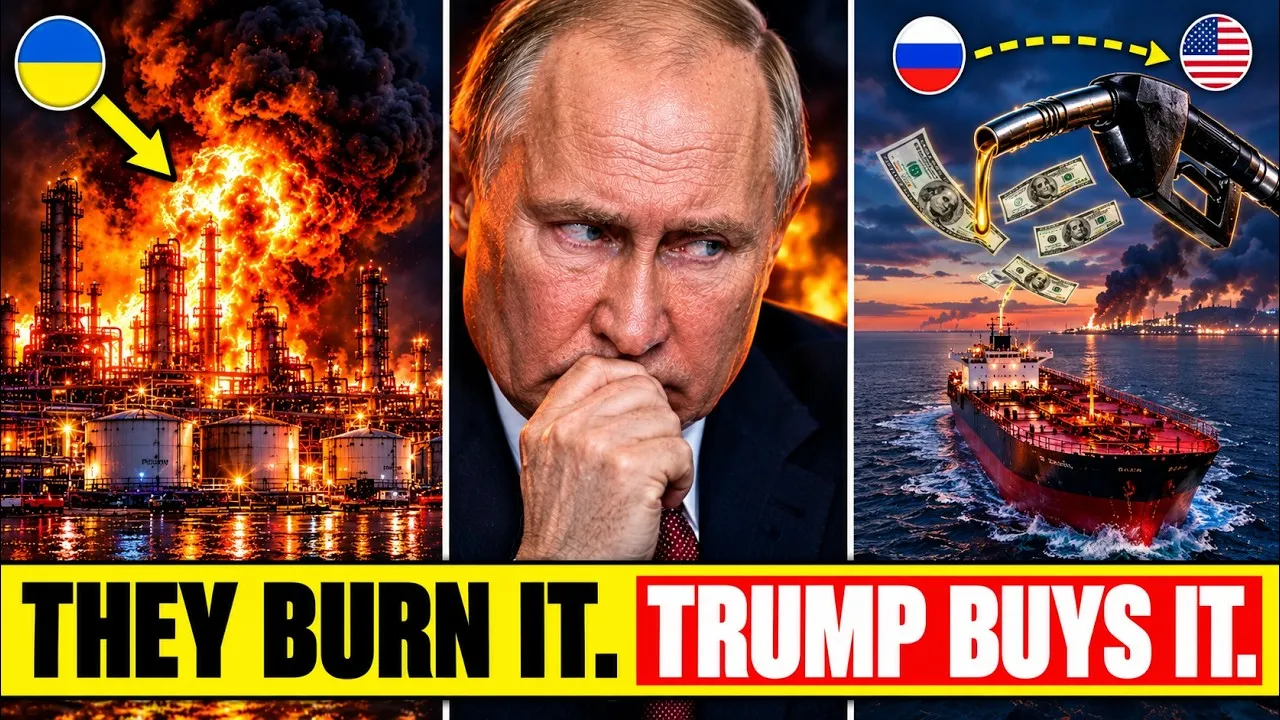
In October the United States agreed to buy Russian diesel, waived a new sanctions law aimed at Russia and asked Kyiv to stop striking Russian refineries. Here is what Washington agreed to, who gains from it, and what it means for Ukraine's strategy.

 Illustration
Key points
- Trump announced a diesel deal with Putin on 9 October, and the US Treasury issued a temporary licence for Russian diesel deliveries. CONFIRMED – Confirmed: backed by at least two independent, reliable sources or by direct evidence.
- Trump waived the new sanctions in a law passed by large bipartisan majorities, including tariffs on the biggest buyers of Russian oil.
- Experts quoted by Time, Al Jazeera and the CFR expect little effect on US diesel prices.
- Ukraine paused refinery strikes for three days at Washington's request; Russia hit Kyiv's power plants in that time.
- Reports that Washington threatened to withhold weapons and intelligence have not been confirmed. UNVERIFIED – Unverified: reported, but we could not check it. Treat with caution.
Watch the video
On 21 October, in a palace outside St Petersburg, the US special envoy Steve Witkoff sat down with Vladimir Putin. According to Al Jazeera, Witkoff told Putin that Washington was grateful for a deal that let sanctioned Russia sell diesel to the United States. Source [3] A few hours later, Russian missiles and drones hit Kyiv. Ukraine’s emergency service said at least four people were killed and dozens injured, including four children. CLAIMED – Claimed: stated by a government, army or official, but not independently verified.
For most of this year, Ukraine has been striking Russia’s refineries to cut the money and fuel that keep the war going. Now the most powerful country on Ukraine’s side has agreed to buy the product of those same refineries, has paused a new sanctions law aimed at Russia, and has asked Kyiv to stop hitting Russian oil.
This article sets out what Washington agreed to, who gains, and what it means for Ukraine – including the American side’s argument, which deserves a hearing before anyone judges it.
The deal
On 9 October, Donald Trump announced in a social media post that he had reached an agreement with Putin on diesel. According to the Council on Foreign Relations, which has published a detailed explainer, the terms Trump described were: more than 300,000 tonnes of Russian diesel immediately, another 500,000 tonnes in November, then 1 million tonnes after that, and 3 million tonnes “within a short period of time, depending on its refineries”. Source [1]
To make that possible, the US Treasury issued a temporary licence suspending US sanctions on Russian diesel deliveries. Time reports that it runs until 7 April 2027. Source [2] The announcement is public and the licence exists. CONFIRMED – Confirmed: backed by at least two independent, reliable sources or by direct evidence. What is not public is the price, or which companies are involved.
The sanctions law that was set aside
On 16 September, the US Congress passed a sanctions law named after the late Senator Lindsey Graham. Time reports the votes: 86 to 11 in the Senate and 262 to 159 in the House – a large bipartisan majority. Source [2] The law targeted Russian officials and financial institutions, and proposed tariffs of up to 100% on goods from the biggest buyers of Russian oil and gas, including China and India. It was due to take effect on 18 October.
Shortly before, Trump signed an executive order waiving the new Russia measures. The CFR dates the order 16 October; Time and Al Jazeera date it 17 October. We could not resolve that difference. Source [1] Source [2] Source [3]
What the order does is clear. Existing sanctions stay in place; the new ones are blocked. Trump used a provision that lets the president waive the law if he certifies to Congress that this serves the national interest. Al Jazeera reports the waiver lasts until the administration decides “further action is appropriate”. There is no end date. Source [3]
The American argument
The White House says the deal is about fuel prices and about peace. According to the CFR, the average price of diesel in the United States was $6.18 a gallon on 12 October, up from $3.48 at the start of the year – a huge jump for truckers, farmers and anyone who buys goods moved by road. Source [1] Al Jazeera and Time both cite the war with Iran as a major cause of the price spike. The United States also holds midterm elections on 3 November, with the cost of living at the centre of the campaign.
A White House spokesperson, quoted by Time, said enforcing the new sanctions now would impede peace negotiations. Source [2] CLAIMED – Claimed: stated by a government, army or official, but not independently verified. The CFR reports that the administration hopes the deal signals openness to Moscow and brings Russia back to the table. Source [1]
Does it lower prices?
The experts we could find are sceptical. Tatiana Mitrova of Columbia University told Time she expects at most a modest short-term effect on wholesale prices and little benefit at the pump. Source [2] The EU’s economy chief, Valdis Dombrovskis, quoted by Al Jazeera, said the volumes are “not of macroeconomic significance”. Source [3] The CFR reports that analysts expect little effect on diesel prices before the election. Source [1]
The CFR cites the analytics firm Kpler, which estimates the global diesel supply deficit at about 130,000 tonnes a day. By our arithmetic, the first delivery of 300,000 tonnes would cover a little over two days of that shortfall.
There is a bigger question: can Russia deliver at all? The International Energy Agency says Russia’s diesel output fell by nearly 30% this year, and Russia banned diesel exports for the first time in July because it did not have enough for its own market. The Moscow Times reported that the ban runs until the end of October. Moscow has promised to export millions of tonnes of a fuel it banned from export because of shortages at home. Dombrovskis also questioned whether Russia can supply diesel to US standards. Source [3] We found no source explaining how the deal fits with Russia’s own export ban.
Who gains?
Mitrova says the bigger gain goes to Moscow, which avoids sanctions on its crude oil revenue. Source [2] That is the key point: the diesel is the smaller part, the waiver is the larger one. The tariffs of up to 100% were designed to make countries such as China and India think twice about buying Russian oil. Now they do not have to.
How much is at stake? Al Jazeera cites the Centre for Research on Energy and Clean Air (CREA): in September alone, China bought about €6 billion of Russian crude, and India about €3.6 billion. Source [7] Economist Vasily Astrov, also quoted by Al Jazeera, estimates that about 60 cents of every extra dollar in the price of a Russian barrel ends up in Russian state coffers. Source [3] When sanctions pressure falls and prices hold up, Russia’s budget – and so its war budget – benefits directly.
The Kremlin welcomed the deal. The CFR reports that Putin said, according to Russia’s Foreign Ministry, that he was “confident that this will have a positive impact on the entire global economy”. Source [1]
The pressure on Kyiv
The CFR reports that Trump told Ukraine to stop attacking Russian refineries. Source [1] On 11 October, two days after the diesel announcement, Trump said Russia and Ukraine had agreed to an “energy ceasefire”. The Kyiv Independent reports that Kyiv said it had no prior information about any such agreement, and on 14 October the Kremlin said the ceasefire’s scope was unclear. Source [4]
Ukraine went along with it at first. Volodymyr Zelenskyy later said Ukraine had held off striking Russian refineries for three days at the United States’ request.
During those three days, on the night of 13 to 14 October, Russia launched a large attack. According to the Kyiv Independent, Zelenskyy said Russia used 39 ballistic missiles and more than 120 strike drones and loitering munitions against energy and critical infrastructure in Kyiv, Kyiv region and Kharkiv. Source [4] CLAIMED – Claimed: stated by a government, army or official, but not independently verified. Ukraine’s prime minister said all three of Kyiv’s combined heat and power plants were hit, and Zelenskyy said 600,000 people lost power. Meduza reports Zelenskyy said Russia had killed about 100 civilians in the past week. Source [5]
For three days, one side held back on energy targets. The other did not.
On 15 October, in an interview with the Financial Times, Zelenskyy ended the pause: “The block is out. We’re done.” Source [6] That same week, Ukraine appears to have struck the Ryazan refinery, owned by Rosneft and a key fuel supplier for Moscow. Regional authorities confirmed a fire. Russia’s Defence Ministry said Ukraine used 69 drones and four Flamingo cruise missiles, that all were shot down, and that falling debris started the fire – Russia’s account, which cannot be independently verified. CLAIMED – Claimed: stated by a government, army or official, but not independently verified.
Kremlin spokesman Dmitry Peskov said Ukraine had never declared a moratorium and that “there is nothing new here”. Meduza notes that when Deputy Prime Minister Alexander Novak claimed on 14 October that Ukraine had already hit refineries in Ryazan and Saratov, Ryazan’s authorities had reported no strike, and the Saratov claim remains unconfirmed. Source [5] UNVERIFIED – Unverified: reported, but we could not check it. Treat with caution.
Zelenskyy set a condition: Ukraine would stop striking Russian energy only if Russia stopped too, or if the United States provided more Patriot air-defence interceptors, which he called “the minimum”. He also warned that halting the strikes could encourage more US–Russia energy deals: “Maybe it will be gas. Definitely, it will be gas.”
The CFR writes that, according to reports, Washington threatened to withhold weapons and intelligence if Kyiv did not comply. Source [1] We have not seen that confirmed by the US government or by Ukraine. UNVERIFIED – Unverified: reported, but we could not check it. Treat with caution. If true, it changes the picture, because Ukraine depends on American intelligence and air defence. Time also reports that on 11 October Trump called for Ukraine to replace Zelenskyy. Source [2]
The reaction in Washington
The strongest criticism is not only coming from Trump’s opponents. Republican Senator Thom Tillis called the waiver “beyond irresponsible”. Republican Senator John Cornyn said: “Lindsey would be appalled.” The senator appointed to Graham’s seat said she would prefer to keep the pressure on Russia.
On the Democratic side, Senator Elizabeth Warren said Trump was enabling Putin’s war, and Senate Democratic leader Chuck Schumer said Trump’s “deal with the devil keeps getting dirtier”.
The CFR reports that on 13 October, twelve members of the Senate Foreign Relations Committee from both parties urged Trump to reverse the deal, and on 15 October, 22 House members asked the administration to justify its actions under existing law. Source [1] This is not a simple left–right split: a sanctions law passed by large majorities in both parties has been set aside by the president.
Europe
Honesty cuts both ways here. Al Jazeera reports that the European Council said it regrets the US decision. Source [3] The CFR reports that EU foreign-policy chief Kaja Kallas called the United States “our biggest ally” but said the EU’s message is clear – and that on 12 October the EU adopted its largest-ever sanctions package, with nearly 1,600 new listings. Source [1] Kallas also backed Ukraine’s decision to resume refinery strikes, arguing that oil revenue funds most of Russia’s war.
But Europe is not in a clean position either. The same CREA data shows that in September the EU still bought about €817 million of Russian pipeline gas and about €615 million of Russian liquefied natural gas. France alone bought €446 million of Russian LNG that month, 103% more than the month before. Source [7] The campaign group Urgewald says more than 12 million tonnes of Russian Arctic LNG entered EU ports from January to September, 9.5% more than last year. The EU plans to phase out Russian gas imports next year.
When Europe criticises Washington for buying Russian diesel, Washington’s defenders can point out that Europe is still buying Russian gas. Both are true. Neither cancels out the other.
Each side, with labels
- The US government says the deal lowers fuel prices and helps bring Russia to peace talks. CLAIMED – Claimed: stated by a government, army or official, but not independently verified. The expert evidence on prices suggests a small effect at best.
- Russia says the deal is good for the global economy. CLAIMED – Claimed: stated by a government, army or official, but not independently verified. It gains relief from new sanctions and a symbolic win over Western unity.
- Ukraine says the deal is wrong and helps only Russia. Its main lever, the refinery campaign, is under pressure from its most important ally.
- Europe says it regrets the deal and has tightened its own sanctions, while still buying Russian gas.
The meeting in St Petersburg
On 21 October, according to Al Jazeera, Witkoff met Putin at the Constantine Palace. Russia released a jailed American teacher, Stephen Hubbard, as a goodwill gesture. Witkoff praised Putin as a humanitarian. Trump delayed a new wave of Russia-related sanctions, saying this was needed to secure Hubbard’s release, and said the war may be as close to ending as it has ever been. Source [3]
Hubbard’s release is genuinely good news for him and his family. But in the same report, the Kremlin said it was willing in principle to restart US-mediated talks with Ukraine while dismissing Ukrainian and European peace proposals as lacking substance. Al Jazeera notes that Putin has consistently rejected face-to-face talks with Zelenskyy and says Moscow intends to seize the rest of eastern Ukraine. Source [3]
That night, Russian strikes killed at least four people in Kyiv and damaged metro infrastructure on the Pivdennyi bridge over the Dnipro, according to Kyiv’s mayor, Vitali Klitschko. Al Jazeera also reports deaths in a strike on a market in Lozova in Kharkiv region, and in Kramatorsk and Dnipropetrovsk region. Source [3] Moscow’s mayor, Sergei Sobyanin, said Ukraine launched 630 drones at the Moscow region, 163 of them towards the capital, and that most were intercepted. CLAIMED – Claimed: stated by a government, army or official, but not independently verified.
Ukraine’s foreign minister, Andrii Sybiha, summed up Kyiv’s view: “Appeasement will not stop the war. Only strength will.”
Our view
This is a view, not a fact. In October, Russia received a diesel licence, a waiver of new sanctions, a public thank-you and a delay of further sanctions. So far it has given back the release of one American prisoner and a statement that it is willing, in principle, to talk. On the battlefield and in the sky over Kyiv, nothing has changed. If the deal was meant to buy a change in Russian behaviour, that change has not been seen yet.
The risks for Ukraine
- Dependence. Ukraine needs American Patriot interceptors and, by most accounts, American intelligence. If the reported threats are accurate, Kyiv’s ability to say no is limited.
- Precedent. If energy deals become a channel between Washington and Moscow, Ukraine’s main economic weapon becomes a diplomatic problem instead of a strategic asset.
- Western unity. Mitrova warns that Europe is tightening sanctions while Washington moves the other way. Economist Konstantin Sonin, quoted by Time, reads the move as a sign of US withdrawal from an active role in Europe. Jeff Colgan of Brown University told Time the decision is “like trading Ukrainian democracy for diesel”. Source [2] These are opinions, but serious ones.
- Ukraine’s own exposure. Ukraine heads into winter with its energy system under attack. Continuing to strike Russian refineries carries a real cost if Russia answers by hitting Ukraine’s grid harder, as it already has.
- The deal may fail on its own terms. If Russia cannot deliver the volumes or meet US standards, the diesel will be a small story. The sanctions waiver will still be in force – the part with lasting consequences.
What to watch next
- Delivery. Do the first 300,000 tonnes arrive, and how does that square with Russia’s ban on diesel exports?
- Congress. Twelve senators and 22 House members have pushed back. Will Congress try to restore the Graham law’s sanctions, and will the 3 November midterms change the balance?
- The refineries. Ukraine says the pause is over. Do the strikes continue at the same pace, and does Washington respond with more pressure or with the Patriots Zelenskyy asked for?
Sources
- Council on Foreign Relations (CFR), “Explainer on the US–Russia diesel deal and the sanctions waiver”.
- Time, “Reporting on the diesel licence, the Graham law votes and expert reactions”.
- Al Jazeera, “Reporting on the waiver, the Witkoff–Putin meeting and CREA trade data”.
- The Kyiv Independent, “Reporting on the 'energy ceasefire' and Russian strikes on Kyiv”.
- Meduza, “Reporting on Russian claims about refinery strikes”.
- Financial Times, “Interview with Volodymyr Zelenskyy”, .
- Centre for Research on Energy and Clean Air (CREA), via Al Jazeera, “Data on purchases of Russian fossil fuels in September”.